People of 21st century seem to have
been swept away by the maddening wave of being Healthy and Fit. It is no longer
impossible to don the physique of your favorite actor or actress. This is the
prime reason for us noticing a vast number of people with their gym gears on
and hitting the gym-to be healthier and fitter.
 But is it really so? Are all these people fit
in the true sense? More often than not these fitness freaks are seen complaining
of muscle cramps, shoulder pain, neck pain, low back strain, muscle overload
and hoards of other injuries. All of these problems not only become a barrier
for you in achieving your target but also de-motivate you. Exercise is a
science. In each exercise you have to be aware of your posture, movement,
strength, speed and repetition. Improper application of any of these variables
can be harmful and instead of making you fit, it will deteriorate your physical
condition. Epidemiological studies conclude a rapid increase in the number of
injuries caused due to improper fitness training in the recent years. This
directs us to the purpose of this article-To orient fitness seekers on being
completely fit and how to prevent them from being a victim of injuries related
to fitness training.
But is it really so? Are all these people fit
in the true sense? More often than not these fitness freaks are seen complaining
of muscle cramps, shoulder pain, neck pain, low back strain, muscle overload
and hoards of other injuries. All of these problems not only become a barrier
for you in achieving your target but also de-motivate you. Exercise is a
science. In each exercise you have to be aware of your posture, movement,
strength, speed and repetition. Improper application of any of these variables
can be harmful and instead of making you fit, it will deteriorate your physical
condition. Epidemiological studies conclude a rapid increase in the number of
injuries caused due to improper fitness training in the recent years. This
directs us to the purpose of this article-To orient fitness seekers on being
completely fit and how to prevent them from being a victim of injuries related
to fitness training.
Before you get all zest up and impatient to hit the
gym you should get to know the prerequisites of starting with the actual workout.
The degree of movement available at all joints is
majorly dependant on the strength & flexibility of muscles, stability of
ligaments and integrity of joints. So before you start, knowing these factors
will aid your programme and help you work on any factor which is lacking short.
Shoes
Wearing appropriate shoes plays a pivotal role in imparting
stability. In most of the
weight bearing and cardio exercises most of the
body’s stability comes from the feet and core. Hence if the shoe provides with
a good grip and is inflexible you need not worry about being unstable and can
direct your attention to the target area. 70% people wear wrong size & type
shoes. One essential point to keep in mind is that if you experience any pain
or discomfort either around the feet, ankle, knees it is quite possible that
your incorrect pattern of shoes are the culprit.
Physiological Well Being
Scientifically speaking there are no two people with
the same physiology. Various factors have a play in making up our physiology
such as gender, age, nutritional status, metabolism, hormone level and most
importantly any diagnosed medical condition. If you plan your workout with
these factors in perspective it will give way to germane results.
IT’S ALL ABOUT THE BASICS-COMMON
GROUND FACTORS THAT WE OVERLOOK.
1. Inadequate
Warm Up and Cool Down: It's always a smart idea to incorporate adequate warm up & cool down. Warm up is the preparatory phase for exercising. It functions by increasing the blood flow subsequently increasing the oxygen supply which in turn increases speed & force of muscle contraction. All these factors prepare the various body systems for the upcoming activity in a safe & gradual manner. IN opposition, cooling down has the effect of returning the blood back to the heart rather than allowing it to pool in the exercised muscles which helps in returning the heart rate back to normal. In addition it helps in reducing lactic acid levels & ensures that the vital organs continue to receive a sufficient supply of blood & oxygen at the end.
2. Being over zealous: Being enthusiastic to exercise & to reach your goal is a positive attitude. But don't let it get the best of you as with all the adrenaline pumping through your vein you tend to ignore your limitations. This is possible by letting your system adapt to the challenge progressively & not forcing the change upon a system which is not prepared to handle it. So take your eyes off the heavier weights or kilometers indicator on the cardio machine & give time. Judge for yourself- Are you there yet?
 3. Lifting too much or too little: Either of these extreme measures aren't going to fetch you desired results. Keep aside the condescending attitude & lower down the weights if you need to. Instead it would be wiser to increase the number of repetitions or set with the same amount of weights. This will prevent your muscle fibers from undue overload. On the contrary if you are lifting light weights, you might as well put them aside as they will prove to be nothing more than a wasted. So the ney is to strike the right balance between doing what you are capable of & loading the muscles with right amount of weight.
4. Improper management of rest interval: While it is important to allot a stipulated amount of time for various exercises it is also important to know when to stop & take adequate rest in between. Instead of taking longer or shorter breaks change the tempo of your
exercise for better results. For instance, while doing Biceps curls lower the
weight slowly (enhanced eccentric load) and lift it with a strong and
controlled contraction (concentric load). This is very motivating as you can
see your muscle working and will help you pump your guns without unprecedented
damage.
5. Improper management of exercise and diet: It is popularly known that if you are working your calories off to get those cuts
& abs without following a designed diet plan, you are wasting your time. Diet & exercise are two sides of the same coin. So let your exercise regimen to be aided by your diet plan. Apart from this remember to keep yourself adequately hydrated at all times. Avoid working out on an empty stomach or heavy meals.
MOST POPULAR GYM EXERCISES AND MOST REGULAR
BLUNDERS
1. LATERAL
PULL DOWNS
As we all know this exercise is
designed to work the muscles situated over the lateral side of your back
(Latissimus Dorsii).
The
Blunder Approach: This movement requires excellent
shoulder joint mobility, maintaining a straight spine and activation of core
for stability. Most of the people pull
the barbell down the back of their head and keep their backs either too hunched
or hyperextend from the low back while pulling the bar down. Consequently the
load is not directed to the Lats and results in trick movements leading in
Rotator cuff injury, Trapezius spasm, lower back & neck strain and Shoulder
impingement syndrome.
The
Correct Approach: If done correctly this exercise can
prove to be a great way to
develop your back muscles. Place
your hands slightly beyond shoulder width distance and instead of pulling the
bar behind your head pull it in front of your head. Make sure you lean back a
little from your back while maintaining an erect spine and using your core
muscles for stabilizing your body. Concentrate on pinching your shoulder blades
together and take care to avoid pulling the bar beyond the level of your collar
bone. Maintain the contraction while the bar moves up and fight the momentum
while leaving the bar.
2. SQUATS
Squats are the pinnacle of lower
body strength. In addition if done correctly squats also help to workout core
muscles, arm muscles, low back muscles and with more repetition act as cardio
exercise and aid in weight loss. But it is easily possible to goof up while
doing squats.
Stand straight with your
feet shoulder width apart with the knee pointing straight ahead. Bend your
knee, keep the spine neutral and mimic the action of trying to sit in a chair.
Take precaution to not let your knee cross over your toes and try making an
angle of 90 degrees with your knee. Make sure you keep your chest up and don’t
hunch your upper back. If you are lifting weights then roll your shoulders back
before lifting. Practice this movement facing the mirror in the front and side
view.
3. DEAD
LIFTS
This
is the most effective manner of getting a strong and stable lower back along
with the added bonus of working the core. Any form of exercises which requires
core activation is great as all the movements of arms and legs can be carried
out effectively if the core is active and working.
Set
the bar over your mid-foot with the feet at shoulder width distance and pass
your hand over the bar maintaining them at the same distance. Do not let your
back hunch or hyper extend as either of the positions exert great stress on the
disc and its structures when your lift weights. Drag the bar up just grazing
your shin and squeeze your gluteal and thigh muscles while lifting up. When
lowering the weight down the quintessential point is to bend from your hips
rather than from your knee. If you bend from the knee the bar might hit or roll
over your knees and land down over your forefoot instead of the midfoot. This
will alter the mechanics and make lifting the weight up more strenuous for your
back.
4. BICEPS CURLS
Mention of this exercise may have
you raising your eyebrows and has you wondering who would go wrong while doing
this simple exercise but a considerable number of people fail to execute this
exercise correctly.
A major misconception that people
have is that it’s good to lift heavier weights. This
transfers all the weight
over to your chest and other shoulder muscles which are definitely not the
target muscles. Instead pay attention to the form, direction and precision of
your movement. Lift manageable weights with more reps; it will pay you greater
dividends. Improper execution of this exercise can lead to Biceps tendinitis.
Adopt a posture with your spine
straight with a slight bend in your knee. Roll your shoulders back and lift by
using your upper arms strength in a straight line and lower down with a slow
and steady pace.
5. CRUNCHES
Crunches
are the most incorrectly and over performed exercises. It’s a trend to complete
a 100 or 150 crunch challenge but what you forget in the process is that it’s
the quality of exercise that matters and not always the quantity.
Begin
with lying on the ground/mat with a neutral spine and relaxed neck. Cross your
hands over the back of your head in order to support your neck slightly with
your hands. Make sure you don’t hunch your upper back or bring your elbows
close to each other. Lift up using your abdominals by imagining someone is
punching you in the stomach. Slowly lower down your back. The commonest mistake
people make is to strain their neck while lifting up. This is because they fail
to connect with the muscle they have to work and instead of contracting their
abdominals they lift up with their neck.
Apart
from this there are numerous exercises where you can go wrong. Hence we
conclude that if you carry out exercises with a scientific approach you can keep
uninvited injuries at bay and focus on gain not pain. Another important fact to
remember is that if you develop any injury, you should immediately visit an
expert in exercise science - A Physiotherapist.
We have become tech smart, book smart &
street smart, it’s time to become gym smart…

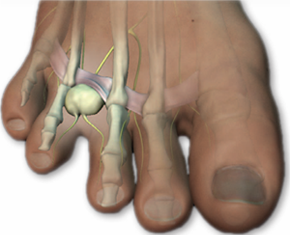
 Most commonly, the first metatarsal head is affected- the ball of the foot just behind the big toe. In the foot there are small toe nerves between the metatarsal bones. When the head of one metatarsal bone is pressed against another, the small nerve is caught between them & start to become inflamed, thus causing metatarsalgia.