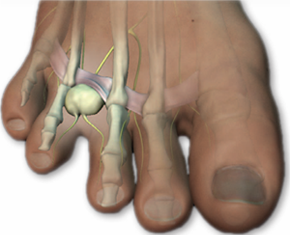
METATARSALGIA

 Most commonly, the first metatarsal head is affected- the ball of the foot just behind the big toe. In the foot there are small toe nerves between the metatarsal bones. When the head of one metatarsal bone is pressed against another, the small nerve is caught between them & start to become inflamed, thus causing metatarsalgia.
These can cause metatarsalgia or Contribute:
- Ill fitting footwears- Footwears that is tight around the toes or has high heels that can add pressure on the ball of the foot as it is forced into tight space.
- Overweight- Overweight people may suffer this pain as the excess weight can strain on the foot.
- Age- As a person ages several degenerative changes occur in the body, one such is reduced shock absorption. Metatarsalgia can subsequently develop as the foot has less protection from the strain of impact & load.
- High Impact Exercise- People who run or play high impact sport are at risk of metatarsalgia. When we running our feet absorb large amounts of force.


- Shapes of the foot & toes- Having a high arch in your foot or a second toe longer than the big toe can add to the pressure on the metatarsals.
- Stress fractures- These are small breaks in the toe bones or metatarsals. They can cause pain when weight is put on the foot- the individual compensates by changing the way they put weight on his/her foot.
Medical conditions that can cause Metatarsalgia:
- Bunion- this is a painful swollen bump that occurs at the base of the big toe.
- Rheumatoid Arthritis- swelled joints in the foot can cause metatarsalgia.
- Morton's Neuroma- is entrapment & irritation of the inter digital nerve which passes between 3rd & 4th metatarsal bones.
- Diabetes- the small nerves in the foot can become irritated, thus causing metatarsalgia.
Common symptoms of metatarsalgia:
- A burning pain
- Sharp aching
- Pain in the ball of the foot.
- Pain increases when walk bare feet.
- Pain that worsens when standing or moving around but decreases at rest.
Treatment:
- Apply ice pack to the area approximately 15-20 minutes 2-3 times a day. Wrap ice in something to protect your skin from direct contact to ice.
- Avoid high impact sports & exercise that puts pressure on the feet. Try something lighter on the feet i.e. Cycling or swimming.
- Try to keep pressure off the feet, when resting try putting your feet up.
- Be sure to exercise your ankle & keep stretching the Achilles tendon.
- Use fitted insoles (Orthotics) as these will reallocate pressure or reduce pressure, improve foot function & guard the ball your foot.
- Change to better fitting flat headed shoes.